
How to Get Court Records
Know the court first, then describe the record. Give the clerk something to work with: a case number, party name, document name, or filing date. Land instruments need an instrument number, book and page, grantor or grantee, and the recording date. Each court has its own record keeper. The Circuit Clerk maintains the general docket and proceeding record for Circuit Court. The Chancery Clerk holds the Chancery categories. Justice and municipal matters run through separate clerk paths. A docket sheet is a smart first request. It shows the documents and dates before you order the full file.
- Identify the court, case number, document sought, and whether inspection, an ordinary copy, a certified copy, an exemplified copy, a transcript, or a docket sheet is needed.
- Use Public Access to MEC (PAMEC) for permitted participating electronic dockets, or the Chancery land portal for an instrument search; do not treat either route as a complete countywide records system.
- Call the responsible clerk, visit the counter or available public terminal, or ask the clerk how a paper or older file can be inspected.
- For a mail request, send it to the exact clerk, include clear contact information and the requested record details, and ask first about payment and delivery instructions.
- Ask whether the office accepts a request by phone, fax, email, or another method for that record type, then confirm the current copy, certification, postage, or vendor charge before payment.
Mail requests go to the office that holds the file. Circuit Clerk, P.O. Box 467; Chancery Clerk, P.O. Box 507; Justice Court, P.O. Box 551. All are in Hazlehurst, MS 39083. The county publishes no single public-records form or bulk-records protocol. A request under the Mississippi Public Records Act should name the record and the custodian, though judicial access still depends on court policy, rules, statutes, and orders.
Copiah County Court Records Custodians
A request works best when it lands with the right custodian. Circuit Clerk Derrick Cubit keeps the general docket, party names, pleas, indictments, appeals from inferior courts, papers, orders, the execution docket, and complete proceeding records. Chancery Clerk Deborah Sandifer holds Chancery records: wills, estates, guardianships, conservatorships, divorces, DHS and child-support matters, adoptions, commitments, and youth-court categories. For the county's traffic, misdemeanor, affidavit, hearing, and small civil route, contact Justice Court Clerk Mona Lisa Carr. Municipal records stay with each city clerk.
Chancery Clerk Deborah Sandifer
122 S. Lowe Street
Hazlehurst, MS 39083
601-894-3021
Justice Court Clerk Mona Lisa Carr
121 W. Frost Street
Hazlehurst, MS 39083
601-894-3218 or 601-894-4403
These offices do not swap files. A land instrument lives in the Chancery record system. A Circuit felony file belongs to the Circuit Clerk and MEC. A municipal citation goes to the court named on the citation.
Types of Court Records
What happened, and where, decides which record you need. Circuit Court holds the general docket and court-file material. Chancery records cover a distinct set of equity and family-related categories. Justice and municipal records often begin with a citation, affidavit, warrant, or local docket. So name the court in your search. Asking one clerk for every county record under a party name rarely works.
- Circuit docket sheets, case papers, pleas, indictments, orders, judgments, execution-docket entries, and appeals from inferior courts.
- Chancery domestic, estate, guardianship, conservatorship, land, will, commitment, adoption, DHS, and youth-court categories, subject to access limits.
- Land instruments and index details, including grantor or grantee, instrument number, book and page, and recording information.
- Justice Court citations, misdemeanor and civil material, affidavits, hearings, and related case records within the court’s jurisdiction.
- Municipal traffic, ordinance, and limited criminal records held through the relevant city court or clerk.
Federal civil, criminal, and bankruptcy files are not Copiah state-court records. Search them through the applicable federal court and PACER route.
Copiah County Court Records Online Index
The county-linked Chancery online records portal is a starting point for land records and related purchases. Its inquiry screen offers Search All, Grantee, Grantor, and Matched Name options. Filters cover date, instrument, volume, location, and type. A detail view can show an instrument number, book and page, file date, page count, parties, property fields, and related instruments. Where available, you can view images, download a PDF, or buy an official or certified copy. Read the portal's own warning. The online land index is informational, and the courthouse index controls. A portal result is a finding aid, nothing more. It cannot settle a title question. It cannot replace the official index, or prove that every Chancery case document is available remotely. The portal says data updates daily except weekends and holidays. It also warns of after-hours maintenance. So a clerk confirmation still helps when time is short.
What a Court Record Contains
A court file and a docket sheet are related but not the same. The docket opens with the court or county, case number, filing date, case type, and the public caption or parties. Then it lists case events in order. The full clerk file may include documents referenced in that index. Conventional exhibits, paper material, sealed items, and unscanned records may not appear in a remote result. If you need a specific order or judgment, ask for it by name. A docket entry alone does not supply the document text.
| Case number | The court-assigned identifier used to locate the correct file and distinguish similar names. |
|---|---|
| Pleadings | Documents that start or respond to a case, such as a complaint, petition, affidavit, indictment, motion, or answer. |
| Orders and judgments | Signed rulings, minute-book-referenced orders, judgments, or other court action where access is permitted. |
| Docket sheet | The chronological index of filings, settings, motions, orders, hearings, trial events, judgment, appeal, and closure. |
| Exhibits and attachments | Material filed with or held in the case; availability can differ from the docket because of format, scanning, restriction, or court order. |
A Copiah County case search can turn up a permitted docket before you make a targeted record request.
Copiah County Court Records Electronic Files
Copiah County keeps a hybrid records system, and that shapes how a docket search works. The Circuit MEC CourtInfo page shows a Go Live date of July 6, 2020. The Chancery CourtInfo page shows April 18, 2016. The gap matters. An older case may sit as a legacy record. Even current files can hold conventional documents or exhibits. Local procedure routes signed orders through judge-office and Circuit Clerk filing workflows. So a filing can be signed or delivered before it ever shows up in a public remote view. Circuit CourtInfo lists MEC CM/ECF V4.0 and technical filing limits. Those limits bind the filing system only. They give a public visitor no right to upload a document. Watch the status flags too. Indicators like LegacyCase, Legacy Complete, Legacy Incomplete, ELECTRONICBOOK, Vault_In, and Vault_Out hint at migration or storage context. But they cannot tell you where the actual court record lives. Only the clerk can explain that. Keep the case number and the clerk telephone line with any electronic result. A maintenance period or a legacy flag can force a non-online access route at any time.
Certified Copies and Fees
A plain copy just reproduces the record. A certified copy carries the clerk's certification for the complete document. The receiving agency or court may demand that form. Ask the receiving party which version it needs before you pay for certification. Copiah posts no unified certified-copy schedule covering Justice Court, the municipal courts, or countywide records. The responsible clerk must quote the live amount. One caution on PAMEC: its charges are remote-search charges, not certification charges.
| Item | Documented amount or status |
|---|---|
| PAMEC annual registration | $10 under the official PAMEC terms. |
| PAMEC search return | $0.20 per returned page; a zero-result search has a one-page charge. |
| Chancery land portal card service | 3.5%, $2 minimum; purchase language is nonrefundable. |
| Chancery statutory-digest reference | $1 certification per complete document and $0.50 per clerk-made page; older-digest reference, verify current law and local total. |
| Circuit statutory current-reference figure | $2 per page for making or certifying records; verify the current local total with the clerk. |
| Justice and municipal certification | Current local fee not located in official sources. Call the responsible clerk. |
For the older Chancery statutory reference, the State Auditor's county-fee digest is the official source. It is not a current Copiah fee sheet, which is why the clerk must verify any amount.
Copiah County Court Records Fee Differences
One records task can pull in three separate costs. PAMEC bills for remote pages its searches return. The Chancery vendor interface adds its stated card service charge to an online purchase. A clerk may also charge separately for some services. Copying, certification, mailing, a transcript, or another service can each carry its own fee. Paying one charge does not satisfy the rest of the request. An online land-record purchase does not cover everything automatically. It may not include a certified document, postage, or every paper in the file.
Before mailing anything, ask first. Confirm which record is available. Ask whether a plain or certified copy is permitted, the exact payment method, the full fee, and whether return postage is required. Justice Court's traffic instructions set the rule for mailed payments. They call for a money order or cashier's check with a citation copy. Still confirm the record and certification instructions for your particular request.
Public Access and Sealed Records
Mississippi Code Title 25, Chapter 61 is the Mississippi Public Records Act. The Mississippi Ethics Commission treats public records as public property, subject to reasonable written procedures. Court records work differently. The PAMEC privacy policy notes that the judiciary is a separate branch. Judicial records can be governed by other rules. Supreme Court policy and individual court rules may apply. For any court record, one rule applies. Rely on the clerk's procedure, court rules, applicable statutes, and the specific order in the file. A public-records request cannot override a sealing order or a confidentiality law.
Key rules:
Mississippi Code Title 25, Chapter 61 describes the state public-records framework, but it does not create unconditional remote access to judicial files.
Mississippi Code §43-21-261 materials describe the strong confidentiality limits that apply to youth-court records concerning children.
Policy note: Mississippi judicial public-records policy sets the court-policy baseline; access still depends on court rules and specific orders.
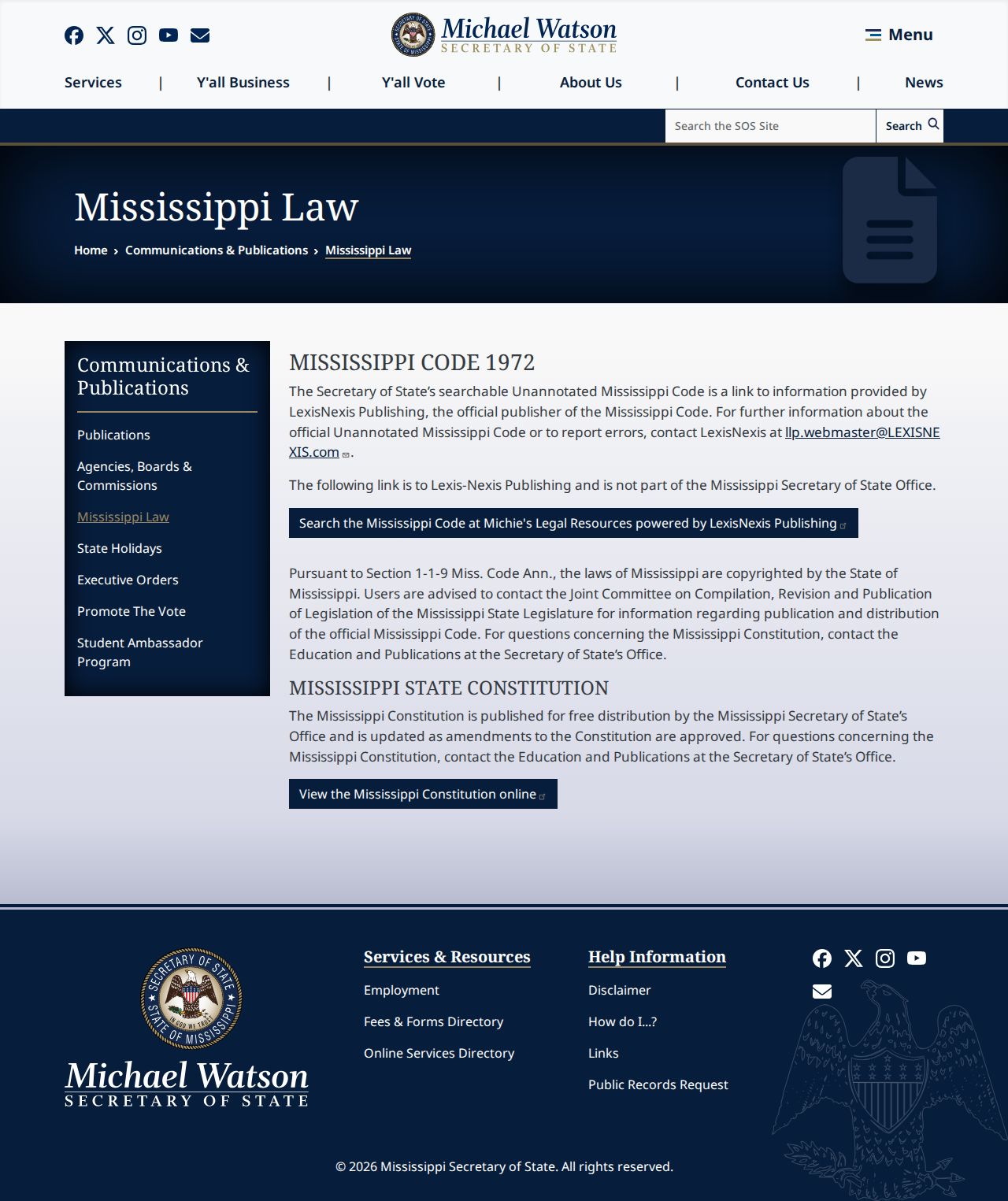
PAMEC flags include SEALED, Sealed_Case, and EXPUNGED. A case number or a visible flag does not open the underlying file. Some files are often restricted. Youth records, adoptions, and certain DHS and child-support matters fall in this group. So do commitments, guardianship details, and protected personal information. Sealed criminal matters and material under a protective order may also be restricted. Ask whether a redacted copy, a limited docket view, or in-person inspection is lawfully available. The official Mississippi Code access page is the state's starting point for current statutory material.
Pair the current rule or statute with a court or clerk confirmation. Never assume a public index entry makes the full document available.
Copiah County Court Records Federal Files
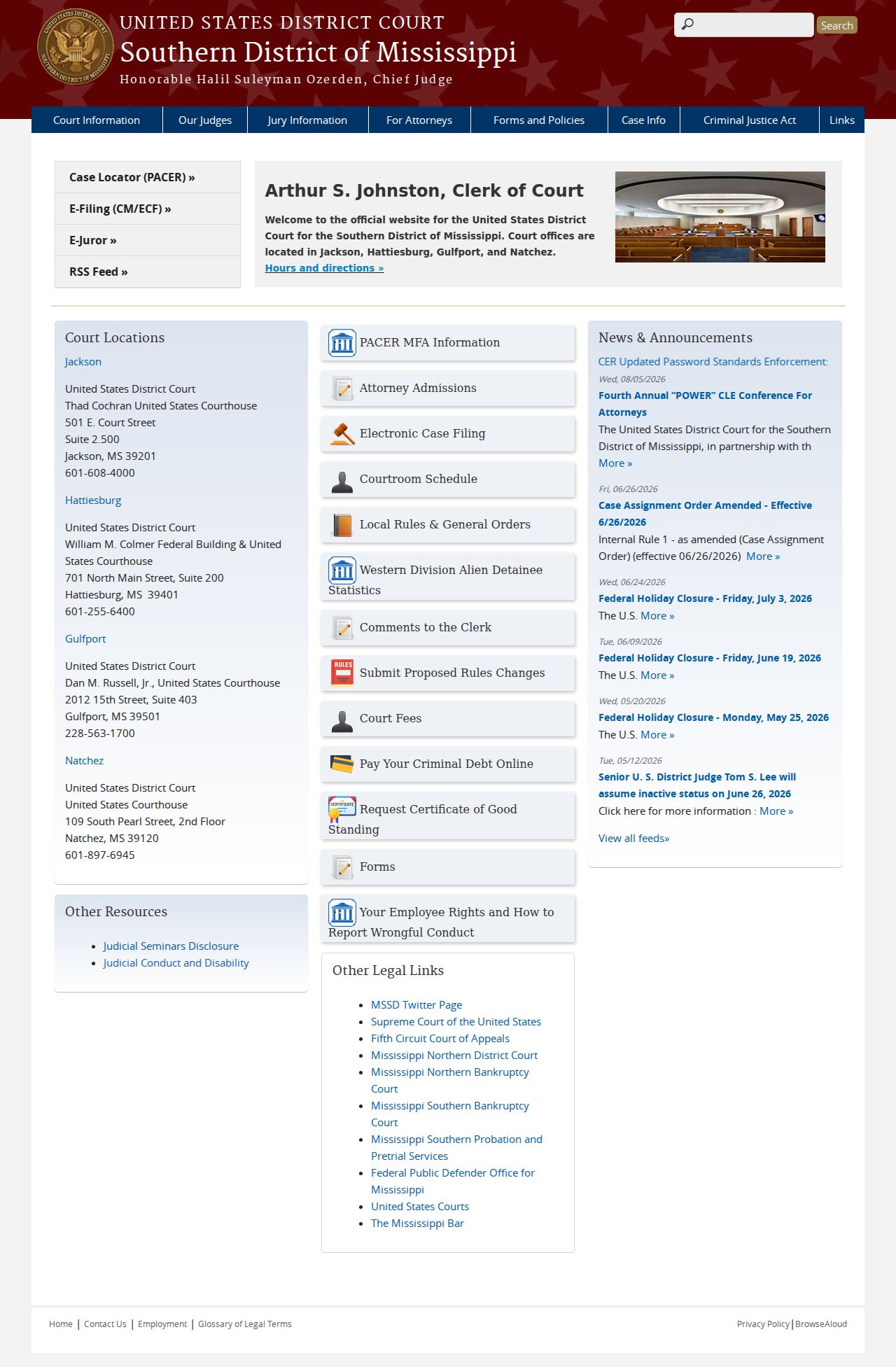
State records and federal records are separate systems. A Copiah event or address does not put a case in the county's state docket. Federal civil and criminal searches run through PACER and the correct federal clerk. That court sits in Jackson. It is the United States District Court for the Southern District of Mississippi. The bankruptcy location list places Copiah in the Jackson bankruptcy-office area. On appeals, the choice matters. The Fifth Circuit handles federal cases from Mississippi, not the state Court of Appeals.
For federal material, use PACER. Or use the federal clerk, a courthouse public terminal where offered, or the right mail and telephone route. Attorneys file through CM/ECF. PACER remains the public-access channel. Those are federal matters. Federal fees, restrictions, sealing rules, and document availability can change independently of state MEC or Copiah clerk fees. The official Southern District landing page names the federal court. It also shows its CM/ECF access path.
Run a separate federal search. That keeps a state Clerk record, a PACER docket, and a bankruptcy file from being mistaken for one records system.